
Shopify POS Review 2026: Pricing, Pros, Cons and Alternatives
What a Shopify store pays to take cards at the counter, which retail jobs need the per-location upgrade, and when Square, Lightspeed, or Clover costs less.

Shopify POS is worth it when the online store already runs on Shopify. Basic is $39/mo, or $29/mo billed yearly, and in-person cards are 2.6% + 10¢ with no separate POS fee. A permanent shop that needs exchanges, pickup, or unlimited register-only staff adds POS Pro at $89/mo per location. On a month with $12,000 in person and $18,000 online, Basic comes to $942 before that add-on.
Key factsBest for: Stores whose website already runs on Shopify and that want…
- In-person selling comes with the Shopify plan, and exchanges and pickup sit on a per-location add-on.
- Included POS: In-person selling has no separate monthly fee on a paid Shopify plan.
- POS Pro: A per-location add-on for exchanges, pickup, and register-only staff.
- In-person rate on Basic: Basic's in-person cards go through Shopify Payments at the rate in the pricing table.
- Alternatives covered: Square POS, Lightspeed Retail, Clover, Toast POS
Pros
- Every paid plan includes in-person selling, refunds, gift cards, and camera barcode scanning, so a stall can skip the add-on.
- Online and in-person orders share one catalog, with 10 inventory locations on Basic, Grow, and Advanced.
- Plus includes the first 20 Pro locations, and up to 200 when Shopify Payments is the processor.
Cons
- Exchanges, in-store pickup, and unlimited POS-only staff require the Pro add-on at each location.
- A third-party payment provider adds a 2% fee on Basic, on top of that provider's own rate.
- The Shopify App Store listing is 3.2 out of 5 from 401 reviews, and 111 of those are one star.
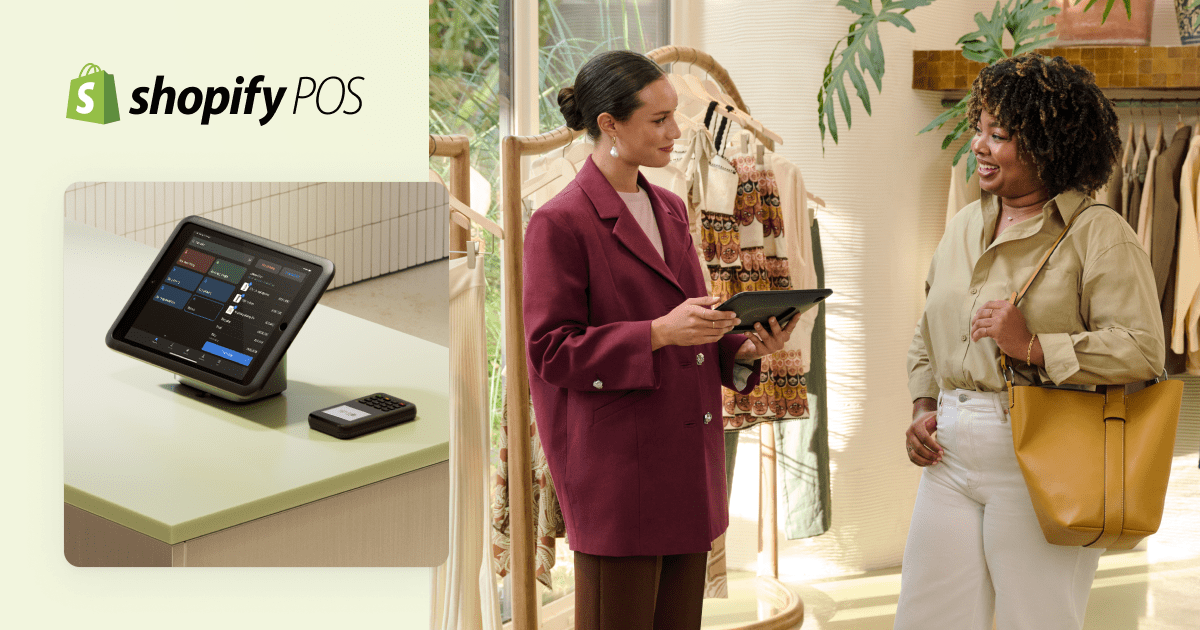
Buying a second register after you have already chosen Shopify is how a store pays twice for one catalog. The included POS is the right bill until the counter needs exchanges, pickup, or staff who never open the admin. A pop-up or a market stall should leave the upgrade off. A boutique that swaps sizes should turn it on, which adds a location fee on top of the plan and the card rates.
Toolradar data: Shopify POS is listed as an alternative to 9 other tools, against a median of 3, among the 176 inventory management tools Toolradar tracks, as of October 2026, on the Shopify POS listing. Buyers cross-shop it, and the bill still depends on the plan, the card mix, and whether each store turns on the upgrade.
This review is for a retailer whose website is on Shopify, or who is about to put it there, and who also rings sales in person. The sale might be at a counter, a market stall, or a pop-up. It prices one month of online and in-person cards, then says when Square, Lightspeed, Clover, or Toast is the cleaner buy.
What is Shopify POS?
Shopify POS is the point-of-sale app that rings in-person sales against the same products, customers, and inventory locations as the online store. Every paid Shopify plan includes it, so you are not shopping for a second vendor. You run it on a phone or tablet with a card reader, or on Shopify's countertop terminal.
There are two feature sets, not two unrelated products. The included set is casual in-person selling, enough when you take payment and issue a refund. POS Pro is the paid location upgrade for exchanges, pickup, or staff who never log into the admin. Plus includes the first 20 of those Pro locations, and up to 200 when Shopify Payments is the processor, so a chain stops buying the add-on one shop at a time.
How Shopify POS works
You open a Shopify store, install the POS app, and pick a plan. Most new stores get a 3-day trial, then three months billed at $1/mo, then the list price. Annual billing charges the year up front at a lower monthly rate. The help center says plan charges are generally non-refundable, with a separate refund policy for the plans themselves, so an annual bill is a commitment you make after the counter workflow is settled.
Day to day, staff take tap, chip, and swipe through Shopify Payments, or key a card when the plastic never touches the reader. Cash payments can be recorded offline, which keeps a market stall selling when the signal drops. The sale lands in the same admin as the website, so a shirt sold at the counter comes out of the same stock count as a shirt sold online.
The upgrade is its own subscription, and the app listing gives POS Pro a 14-day trial. When the trial ends you have to choose Pro yourself, or the location drops back to the included features at no extra cost. A location added later does not get a second trial. Pro bills on its own 30-day cycle, separate from the Shopify plan, and a mid-cycle upgrade can be prorated, so a holiday weekend can still create a partial bill.
Shopify POS key features
Shopify POS pricing
Prices checked on Shopify's pricing page and the POS pricing page on October 17, 2026. Monthly and yearly prices for Basic, Grow, Advanced, and Plus are in the table. Plus starts at $2,300/mo, which the POS page describes as a three-year subscription price. A chain that cannot sign for three years should not treat it as a normal monthly plan. The Pro add-on is a per-location charge, shown in the table, on top of whichever plan you pick. A separate switch offer prices a 12-month Pro term at $67/mo per location, paid monthly, for retailers who are new to Pro, and leaving early means paying the months left. It renews on its own, discount included, so the lower price is a commitment.
Here is one store on monthly Basic with Shopify Payments. In-person cards are $12,000, which is 240 sales at $50. Online standard cards are $18,000, which is 150 orders at $120. In person, Basic's percentage is $312 and the per-sale fees are $24, so the counter costs $336. Online, 2.9% is $522 and the per-sale fees are $45, so the website costs $567. Add the plan and the month is $942, and turning on Pro at that one location brings it to $1,031. The rate does not fall when you add Pro, so you are paying for exchanges, pickup, and register-only staff rather than a cheaper swipe.
Grow costs $66 more than Basic each month and saves 0.2 points online plus 0.1 points in person. On this mix that is $36 online and $12 at the counter, $48 in all, so Grow is still $18 more expensive. At a 60% online and 40% in-person card mix, the rate gap covers that plan difference once combined card sales reach $41,250 a month. A store that sells only online hits the same break-even at $33,000 a month, and a store that sells only in person needs $66,000. Below those lines, stay on Basic unless you need Grow's staff accounts.
Square's free plan, read the same day on Square's US pricing page, charges Basic's in-person percentage plus 15¢, and 3.3% plus the online per-sale fee. Run the same month entirely on Square and online is $639, the counter is $348, and the total is $987, which is $45 more than Basic with the included POS. The whole in-person gap is a nickel a sale, and 240 sales times 5¢ is $12, so Square is not winning on the counter. Square wins if you do not need a Shopify website, and it loses once those online orders are in the same picture, because that is where the free plan gets expensive.
A second processor inside Shopify is the expensive version of that idea. Basic's third-party fee on the counter volume above is $240, before the other company's rate. Stores opened on or after May 12, 2025 also pay the third-party fee on gift card and store credit amounts. Keyed in-person cards are 3.5% plus Basic's in-person per-sale fee on Basic, Grow, and Advanced, so phone orders should not be priced as taps. Online international cards add 1% on every plan, and Shopify publishes a higher online premium-card rate (3.5% + 30¢ on Basic) without naming which cards qualify.
Lightspeed's retail pricing page shows three monthly tiers in the table, one register on each, and a card-present rate of 1.5%. The POS overview instead quotes in-person processing at Basic's rate and card-not-present at Basic's online rate. On this counter, that printed percentage is $180 and the Basic-matching rate is $312, a $132 gap before any per-sale fee. Get that rate in the contract before you compare it with Shopify. Clover's retail pricing page, read the same day, prices Basic at the upfront and installment amounts in the table, matches Shopify's in-person rate, and labels those prices as online-only. Standard and Advanced add Retail Growth and a lower in-person rate. Toast's cost guide (August 28, 2026) puts an eligible new one-site restaurant on a Starter Kit with no monthly software fee, and lists Point of Sale at $69/mo. It does not publish a processing percentage, so a dining room can start there and a Shopify catalog should not.
Methodology. Plan prices, card rates, feature gates, and contract windows come from Shopify's pricing page, POS pricing page, help center, app listing, switch offer, and hardware store, read on October 17, 2026. Square, Lightspeed, Clover, and Toast numbers were read on each vendor's own page that same day. Every monthly total below is arithmetic on those printed rates at the volume stated above. We did not run the software. The check date moves only when those pages are read again.
| Plan | Price | Best for |
|---|---|---|
| Shopify Basic, monthly | $39/mo | In-person selling included, 10 inventory locations, limited POS staff access |
| Shopify Basic, yearly | $29/mo | Same card rates as monthly Basic, with the year charged up front |
| Shopify Grow, monthly | $105/mo | 5 additional staff accounts, unlimited POS logins, lower card percentages |
| Shopify Grow, yearly | $79/mo | Same Grow rates and staff accounts, billed annually up front |
| Shopify Advanced, monthly | $399/mo | 15 additional staff accounts and the lowest in-person rate of the self-serve plans |
| Shopify Advanced, yearly | $299/mo | Same Advanced rates and staff accounts, billed annually up front |
| Shopify Plus | Starts at $2,300/mo | Three-year subscription, 20 POS Pro locations included, up to 200 with Shopify Payments |
| Shopify POS Pro | $89/mo per location | Exchanges, pickup, unlimited POS-only staff, inventory counts, and retail reports |
| POS Pro 12-month switch offer | $67/mo per location | New Pro subscribers only, paid monthly for 12 months, remaining months due if you leave |
| In-person cards, Basic | 2.6% + 10¢ | Tap, chip, or swipe through Shopify Payments |
| In-person cards, Grow | 2.5% + Basic's fee | Tap, chip, or swipe through Shopify Payments |
| In-person cards, Advanced | 2.4% + Basic's fee | Tap, chip, or swipe through Shopify Payments |
| Online standard cards, Basic | 2.9% + 30¢ | Grow is 2.7% and Advanced is 2.5%, with the same per-sale fee |
| Third-party transaction fee, Basic | 2% | On top of the other processor. Grow is 1%, Advanced is 0.6%, Plus is 0.2% |
| In-person manual entry | 3.5% + Basic's fee | Keyed cards on Basic, Grow, and Advanced. Plus is 3.4% with the same per-sale fee |
| Tap and Chip card reader | $49 | Bluetooth and USB reader for a phone or tablet running the POS app |
| Shopify POS Terminal | $349 | Countertop terminal with a customer display for tap, chip, and swipe |
| Square Free | $0/mo per location | Software subscription is zero. Counter taps match Basic's in-person percentage, plus 15¢, and web cards are 3.3% + 30¢ |
| Square Plus | $49/mo per location | Middle tier with a trial that lasts 30 days, in-person percentage 2.5% with Free's per-sale fee |
| Square Premium | $149/mo per location | Top tier with a trial that lasts 30 days, in-person percentage 2.4% with Free's per-sale fee |
| Lightspeed Basic | $89/mo | Single register in the base price. The retail sheet shows card-present processing at 1.5% |
| Lightspeed Core | $149/mo | Reporting depth for a store that is adding managers, still one register |
| Lightspeed Plus | $289/mo | Top retail tier, still sold with a single register inside the base price |
| Clover retail Basic | $349 or $15/mo for 48 months | Starter software and a Compact terminal. In-person cards match Shopify Basic's rate |
| Clover retail Standard | $1,899 + $84.95/mo, or $175/mo for 48 months | Retail Growth and a Station Duo. In-person cards at 2.3% plus Basic's per-sale fee |
| Clover retail Advanced | $2,648 + $104.90/mo, or $232/mo for 48 months | Retail Growth, a Station Duo, and a Flex handheld |
| Toast Starter Kit | $0/mo | New restaurants at one site. Processing is quoted, not printed on the cost guide |
| Toast Point of Sale | $69/mo | Restaurant software with hardware chosen on top, which changes the final quote |
Shopify POS pros and cons
What we like
- Every paid plan includes in-person selling, refunds, gift cards, and camera barcode scanning, so a stall can skip the add-on.
- Online and in-person orders share one catalog, with 10 inventory locations on Basic, Grow, and Advanced.
- Plus includes the first 20 Pro locations, and up to 200 when Shopify Payments is the processor.
What could be better
- Exchanges, in-store pickup, and unlimited POS-only staff require the Pro add-on at each location.
- A third-party payment provider adds a 2% fee on Basic, on top of that provider's own rate.
- The Shopify App Store listing is 3.2 out of 5 from 401 reviews, and 111 of those are one star.
Who Shopify POS is for
Shopify POS fits a store that already sells, or is about to sell, on Shopify. The included tools cover a pop-up, a market stall, and a quiet counter where refunds are enough and size exchanges are rare. One catalog means the shirt on the rack and the shirt on the website cannot both be sold as the last unit, which is the reason to stay in this system.
It is a weak fit when the counter is the whole business and the website is an afterthought. Square's free plan has no software subscription, priced on its own in what Square charges at the counter. A shop that will keep one Clover device for the full installment should read how Clover bundles the hardware before signing. If purchase orders and a wholesale catalog are the real job, start with Lightspeed's retail plans and the Lightspeed listing. A dining room that needs kitchen tickets should open Toast's listing, not a retail upgrade, because Shopify will not print a kitchen ticket.
If the open question is the online plan rather than the register, start with the full Shopify platform review and what the online plans cost. The wider register field is in the register comparison. Stock that outgrows the location cap on the self-serve plans sits in the inventory software roundup, and orders that move between channels sit in the order-routing roundup.
Best Shopify POS alternatives
If Shopify POS is not the right fit, these are the closest options.
| Tool | Best for | Starts at | |
|---|---|---|---|
| Shopify POS | Stores whose website already runs on Shopify and that want one catalog at the counter. | Basic $39/mo, or $29/mo on a yearly bill | Visit → |
| Square POS | Pop-ups and single counters that do not need a Shopify catalog. | No monthly fee on Free | Visit → |
| Lightspeed Retail | Shops with several locations that buy through wholesale catalogs. | Paid Basic, Core, and Plus plans | Visit → |
| Clover | A single counter that will keep the same hardware for the full installment. | Basic $349 or $15/mo for 48 months | Visit → |
| Toast POS | Dining rooms that need kitchen tickets, not a Shopify catalog. | Starter Kit has no monthly fee for eligible new one-site restaurants | Visit → |

The bottom line
Keep the included POS if the store already lives on Shopify and the counter only needs to take payment, issue refunds, and share stock with the website. On the worked month, that combined bill beats running the same cards on Square's free plan, which is the comparison that matters once the website is real. Add the Pro upgrade when staff exchange goods, stage pickup, or work the register without an admin login. Do not add it to chase a lower card rate, because the rate does not move.
Move up from Basic to Grow only after card volume clears the break-even in the pricing section, or when the extra staff accounts are the reason. A counter with no website should start on Square. A hardware installment you will keep for the full term is a Clover question. Wholesale purchasing is a Lightspeed question, after you pin down which of its two printed rates is the one on the contract. The rest of the register field is in the register comparison, and platform choices if the website is still undecided. Apps that sit on the store are in the Shopify app roundup.
Cite this: Retailpresso, "Shopify POS Review 2026: Pricing, Pros, Cons and Alternatives" (October 2026). Checked October 17, 2026 against Shopify, Square, Lightspeed, Clover, and Toast. Sources: Shopify pricing, Shopify POS pricing, Shopify POS subscription help, Shopify POS app listing, Shopify hardware, Square POS pricing, Lightspeed retail pricing, Clover retail pricing, Toast cost guide.
Frequently asked questions
How much does Shopify POS cost in 2026?
Is Shopify POS worth it for a store that already uses Shopify?
Is there a free Shopify POS plan?
What does POS Pro add that the included tools do not?
When does Shopify Grow cost less than Basic for a hybrid store?
Can I use Square as the card reader inside Shopify?
Sources
Prices and plan details come from each vendor's own pricing page, re-checked by the Toolradar pricing tracker.
- Shopify POS pricingchecked Sep 2026
Some offers on this page may be paid placements or contain affiliate links.
More Retailpresso reviews
Buyer guides and software reviews, with prices read from each vendor's own pricing page.
Browse all reviews